

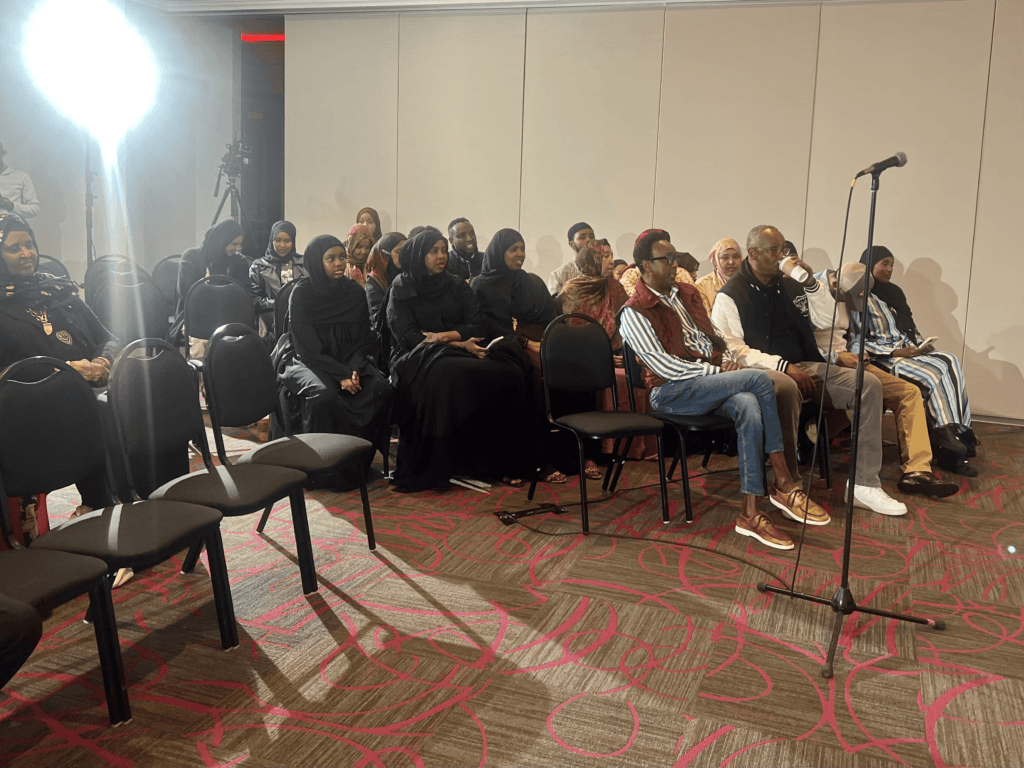
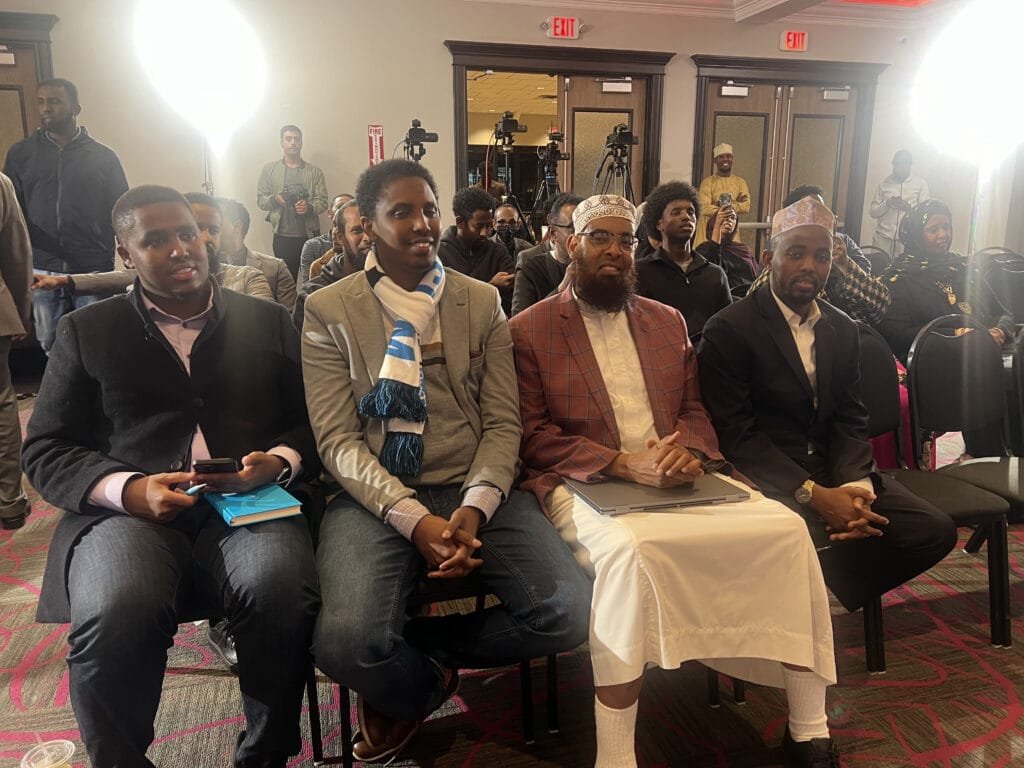
On the eve of the U.S. presidential election, a panel discussion at the Zawadi Center in Bloomington, Minnesota, drew over 70 attendees from various sectors of the Somali community. The event featured influential speakers, including community organizer Abdullahi Farah, political analyst Sheikh Abdirahman Bashir, and University of Minnesota Professor Dr. AbdiRizak Warfa, and was facilitated by Maxamud Mascade from Somali TV of Minnesota. The program was broadcast live on Somali TV of Minnesota, attracting more than 700 viewers who engaged in the discussion in real-time.
A key theme throughout the discussion was the importance of encouraging citizens to vote in the upcoming elections as an exercise of their civic duty. Abdullahi Farah emphasized the need to build political power within minority communities and advocated for a shift in mindset regarding elections. He stated, “Power is organized people and organized money,” urging attendees to support candidates who genuinely represent their interests at both local and national levels rather than simply casting their votes and leaving.
The panelists examined the divisions among Muslim voters, noting a fragmentation of support among Kamala Harris, former President Donald Trump, and Green Party candidate Jill Stein. After extensive discussions, over 35 Imams and community leaders in Minnesota endorsed Harris, while another faction expressed support for Trump.
Sheikh Abdirahman Bashir addressed U.S. foreign policy under both candidates, pointing out that both parties have historically supported Israel unconditionally, a long-standing position in American politics. Professor Warfa posed rhetorical questions to the audience, asking who was responsible for transferring the U.S. embassy from Tel Aviv to Jerusalem, granting sovereignty over the Golan Heights to Israel, and implementing a travel ban on seven Muslim-majority countries, including Somalia. The consensus was clear: all actions traced back to Donald Trump.
Sheikh Abdirahman further contrasted Trump’s aggressive policies with Harris’s advocacy for a two-state solution and her intention to create her own policies, distinct from President Biden’s.
Professor Warfa underscored the civic responsibility of voting, urging community members to reflect on their interests in the U.S. He lamented the marginalization of minority voices, asserting, “You cannot vote for someone who denies your existence.” He cautioned against supporting candidates who have historically overlooked immigrant rights and marginalized communities.
The panel also addressed concerns regarding the viability of third-party candidates. Abdullahi Farah noted that such votes often fail to influence the presidential race due to the stringent thresholds third-party candidates face. Professor Warfa echoed this sentiment, urging voters to consider broader issues beyond single-issue concerns like Gaza.
During the discussion, attendees were allowed to ask questions and express their opinions on various topics, including the economy, immigration, and the conflict in Gaza. One poignant question raised was, “How can I support a party that condones the killing of innocent children and women in Gaza?”
In his concluding remarks, Sheikh Abdirahman Bashir stressed the current threats to American democracy and the moral obligation to safeguard it. He declared, “If America falters, the world is in danger. We must protect the U.S.; it’s a moral obligation.” The event served as a vital platform for the Somali community to engage in meaningful dialogue about their political future as the elections approached.

